
BURNOUT IS SYSTEMIC TO CONTENT CREATION
This isn’t an essay about burnout. I’m not gonna say that “Burnout was invented by John Burnout in 1879”, but you know what, here’s the best definition of burnout just so we can do away with the usual video essay pleasantries:
“[…]emotions are tunnels. If you go all the way through them, you get to the light at the end. Exhaustion happens when we get stuck in an emotion.”
–Emily Nagoski, PhD; Amelia Nagoski DMA. (2019) Burnout: The secrets to unlocking the stress cycle.
Burnout, by the Nagoski Twins, is THE book on burnout. As the quote suggests, burnout is first and foremost emotional. That’s not to say it’s all in your head. Emotions are very physical. As the Nagoskis themselves put it, emotions are neurochemical responses to stimuli (i.e. they’re not ONLY in your head, they’re real). They’re tangible things like your heart rate, hormone levels, appetite, and more. Burnout therefore is, getting stuck in an emotion, and exerting your body until it solves.
Their recommendation: deal with the stressor. The emotion and all its physiological symptoms will resolve if you do it. But what if you can’t? Like, what if you have a shitty boss and you need the job, what if you have 6 figures of debt because of student loans. Or… what if you’re monetising your creativity in a platform that can change its rates and your viewership at the drop of a hat.
In all of those cases you may be able to keep burnout at bay with tried and true tools like meditation, therapy, or asking for help. But burnout is burnout because it’s not easy to opt out of. And if you’re a creator it’s worse. You CAN quit a job with a shitty boss but you CAN’T just barge into YouTube’s offices and kindly ask them to change the change the algorithm to the way it was before.
Honestly not even YouTube can. Famous YouTube retiree, Tom Scott made a great video about the blackbox nature of the so-called “algorithm”. The algo has one main goal, connect viewers with things they’d like to watch as close to completion as possible, so they stay in the platform and watch ads. How it gets there is entirely up to the machine to learn how. Maybe we should all do like Tom and retire.
Sadly we can’t, quitting is a luxury. Only 3% of creators monetise above the poverty line.
This was supposed to be an “easy” essay, an adaption of a keynote I gave at VidCon Mexico a couple of years ago. The talk was a breezy 20 minutes of diversify your income, prevent burnout by scheduling time off, and delegate tasks sooner than you want. Followed by a nice little Q&A. Alas, this is not an easy essay. A lot has changed since then. I still stand by those strategies but my understanding of the creator economy has become more nuanced since then. So, what I would ideally like you to get out of this video, besides of a couple of burnout prevention tips, is the following. If you are or want to be a creator, you shouldn’t consider yourself an artist, although you are creating art, but something in between an athlete and a gig worker.
THE TYPES OF YOUTUBER BURNOUT
Let’s get one thing out of the way, YouTube is still the best platform to try to make a buck out of, just ask any TikToker trying to migrate their audience here, or remember the Viner invasion of 2017? I do. Its pay scheme is the best one out there, 55/45 in favor of its creators. It’s so good that they flipped it when they launched YouTube Shorts.
And yet, the platform always seems very disinterested in the well being of its creators. Like the year all the late night “Jimmys” and the slapper Will Smith, took over the front page, cannibalising views from native creators, or how they restricted swearing only to roll it back, or the absolute negligence in protecting minority creators from bad actors within the platform. Not to mention, the algorithm being so optimised for outrage content and trends, that creators end up making similar videos. Hyperbole is the language of YouTube at this point, thanks to all the Mr. Beast clones. But none of that compares to the fact that creator burnout is just a cost of doing business for the platform.
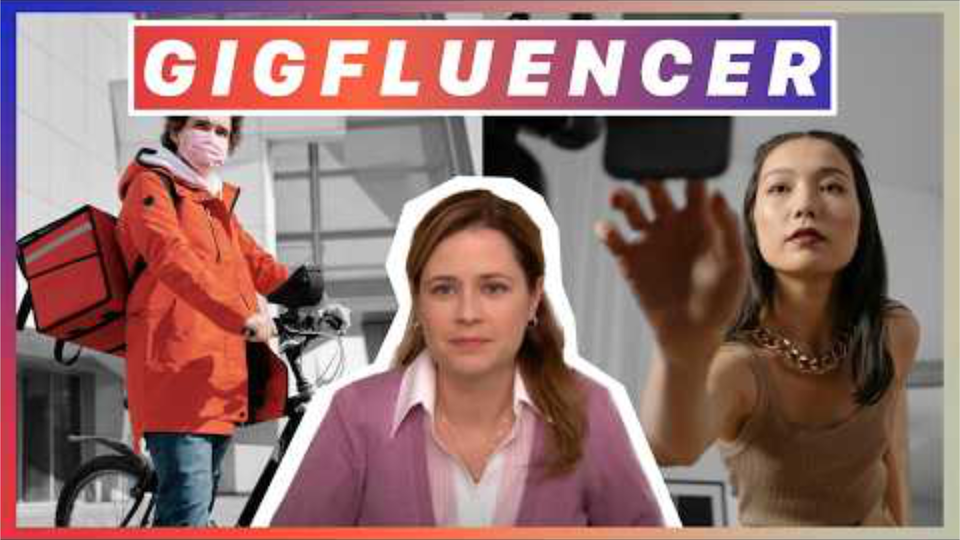
If you are a digital creator monetising mostly through platform ad revenue you are NOT an entrepreneur, YOU are freelancer working for a black box. You’re a CREATIVE GIG WORKER, but instead of delivering food you deliver entertainment or education or yourself. And guess who is the most burnt out labourers in the modern economy? Gig workers. So much for the glitz and glamour of being an influencer.
Ok, but that’s just one type of burnout, what I will call baseline burnout. The “guess I work for the algorithm” burnout. But there are other types of burnout, like affect burnout.
When you communicate online, you inevitably engage in acting out a persona. You can watch Lindsay Ellis’ seminal video essay about “manufactured authenticity” to get a deeper look into it, but the long and short of it is that publicly creating, is emotional labor. I’ve talk to many a creator who denied this to me with a standard “but It’s really me. I’m just myself on camera”. Oh honey, it’s not you.
No matter how close your online persona may be to your regular self, online, you are different. You’re louder, more energetic, more aware. Luria Petrucci has a great course about being yourself on camera on Nebula about this. In it she says that the camera doesn’t add weight, like the myth says, but actually drains energy. Hence, the best way to show up authentically (but not in character) is to be “You times ten”. This doesn’t mean you have to become a living Mr. Beast thumbnail, just that you have to turn the knob up a bit so your personality shows on film. She gives the example of Marques Brownlee, how his chill persona is most likely his chill times ten, just so the camera registers it.
And besides performing on camera, don’t forget you’re also performing off camera. If you are a creator on the digital age you are constantly curating an online persona off platform. Whether that be choosing not to talk about politics in your videos or outside of them to avoid alienating your audience. Or choosing to hide your relationship status as to deepen the parasocial bond (like in the case of K-Pop idols or even some female streamers). However you slice it, you’re performing, and your audience expects you to. That is the parasocial contract they’ve signed with you in their minds, and they expect you to be this exact same person, forever.
“[…], while emotional exhaustion was a common problem among employees, very few of them will actually engage in emotional deviance in order to avoid the negative consequences of surface acting. Lastly, it was found that highly skilled Walt Disney World employees will have already internalized emotional regulation training and display rules that manage emotional behavior. Therefore, it becomes less essential for the Disney Company to formally monitor its employees’ facial expressions and emotional behavior in the future.”
–Anne Reyers, (2011), Emotional Regulation At Walt Disney World Deep Acting Vs. Surface Acting
Yep, I just compared being a YouTuber to being a Disney parks cast member. Don’t forget to smile… or else. Affect burnout to me is a bit like being a planet in Star Wars; you know like a whole planet that somehow defies all logic and is just one topographical feature. You can’t be just one thing all the time, even if that thing is as close to you as it can be, it gets exhausting to act out this limited version of you over and over and over and over… Even if you take breaks, even if you have a healthy upload schedule, this flattening of you, will take a toll. Even if you’re doing well financially affect burnout comes for all creators.
That’s what I mean with creators being athletes (Credit where credit is due, Colin and Samir coined this not me). Lucas Cruikshank wasn’t gonna play Fred past 30. I think that is why all these soft retirements have been so visible this year. Creating at the rhythm that the platform demands, at the parasocial intensity audiences nowadays expect, it’s a lot and creators need you to know it. So they can move on, peacefully. So instead of having a farewell game and heading off to play for a football club in America like say a Messi would; Creators make a farewell video and move on to doing less demanding content like podcasts, books, or managing their IPs behind the scenes (Like Tom Scott and MatPat respectively). The main M.O. of this less than two decade old profession that is digital creation, is to apparently get the bag while you can, and retire before burnout gets you.
AN HONEST AND PRACTICAL GUIDE TO CREATOR BURNOUT
Burnout comes for us all. 89% of creators who struggle to monetise, and 75.5% percent of creators in general, have said to have experienced burnout. It’s not a bug, it’s a feature. The platform has no stake in creators who are burnt out, because there’ll always be someone younger and hungrier to replace you. Remember, you’re doing this out of your own will for the possible upside of having a monetizable audience and quitting your 9 to 5. So YouTube is never gonna step up to address systemic burnout. Boner reducer, I know. But it doesn’t have to be.
One of my side gigs, besides being invited to talk about the creator economy, is mentoring creators. So, from my experience alone, here’s my best attempt a burnout prevention playbook.
DIVERSIFY YOUR INCOME STREAMS
When creators asks me about what I think is the most underrated metric I always say the same thing: To me and the creators I mentor, the metric that matters most is Patreon (or paid subscriptions in general). No matter what size your audience is, you need to offer paid memberships as soon as you can. Don’t over do it and have a thousand tiers and perks that include physical mail. KISS, keep it simple stupid. The most basic recipe for a good Patreon is:
- Have 3 tiers
- No tier should be less than 3 dollars US
- Have one good perk for free members
- Keep the rewards in the realm of the doable, like credits/mentions at the end of the video or any type of sawdust.
What’s sawdust? Glad you asked. Any by-product of your process is sawdust. Do you write your videos beforehand? Share the scripts; Do you keep out-takes you can reasonably make into a quick video? Share that. Do you make sketches or illustrations for your videos? Share the time-lapses or early sketches of those. I love sawdust because it’s smack dab on the Venn diagram of things your audience wants from you and things that don’t add more work to your process. And believe me, people want to know your process, even be a part of it.
You may think your audience doesn’t want that, that they want Discord servers, and merch and meet and greets, and more, more, more. Yes, some people will want more, and by all means do more if you reasonably want and can. Just don’t do something where the learning curve is high without ANY help. Don’t set up a Discord server if you’ve barely used Discord yourself, don’t do merch without researching a reliable and heavily vetted fulfilment partner, and for the love of God, don’t ever promise to physically mail anything to a patron without running the numbers by someone who knows about shipping.
That being said next order of business is to grow an audience elsewhere. I know I just said not to do more than you can, but this is a necessary evil. Having your audience in one platform is as much a recipe for disaster as relying on only one source of revenue. YouTube could ban you tomorrow, or it could be bought by “Blackrock-Vanguard-Taco Bell” or whatever future conglomerate late stage capitalism comes up with, or the algorithm can simply change and not favor your kind of content anymore. So having a presence in other platforms is important.
My one recommendation here is to go with your gut, grow it on the platform you like most as a user. Don’t choose a platform because it’s the trendy one nowadays. Twitch for example is a great platform to generate audience loyalty but I wouldn’t recommend it to a creator who isn’t a fan of live streaming. Go with your gut. If you are a fan of podcasts, start one, if you like vertical short form you have so many options now, hell if you like the cesspool that is Twitter ( I will never call it X), go nuts.
MAKE YOURSELF AVAILABLE
In my country there is a saying “Wawa que no llora no mama” which roughly translates to, the baby that doesn’t cry doesn’t get fed. So yeah, ask for things. Your dream is to collab with the creator that inspired you to start your channel in the first place, reach out by DM. You want sponsorships, pay attention and see which brands are sponsoring creators and send them an email to them. Attache a short pitch of your channel and metrics. Hell, if you’d like start delegating some of the processes in your pipeline that you hate doing, go to r/CreatorServices or ask your community for demo reels and resumés.
Don’t be the baby who doesn’t cry, ask for stuff, reach out to people, enlist help if you need it.
BUILD IN TIME OFF
As you know Tom Scott, took a couple January’s off by spotlighting smaller creators with guest videos. His metrics were actually good during that time [see video for graphs] and it got him some well deserved RnR.
Guest videos are complicated. How do you do quality control? Do you share ad revenue? Is it ethical to even ask for a guest video from a smaller creator? You can deal with those questions however you like, but the fact remains that this is a solid strategy (out of many) to get time off. And that’s just the thing, time off has to be built into your schedule from the start.
Preventing burnout will always be a thousand times better than having to take time off because of “menty-b”. Time off, meaningful, intentional time off, where you’re not jotting down every single idea or making IG stories on your vacation, but actually engaging in something other than creating video (for an extended period of time) has to be part of your creator vocabulary ASAP. And since you have already set up subscription revenue, you’ll have no problem taking some weeks off every now and then.
CONTENT CREATION IS A VALID CAREER PATH, SEEK IT RESPONSIBLY
I know what you’re thinking, this sounds awful, why bother chasing the dream?
You said it, it’s a dream. Being able to live off of your creativity is THE dream. Being respected by your piers because of things you wrote, produced and shot would not only be amazing, but the fact that is would be you job seems insane, right? Just as insane a dream as say… being able to make a living playing the sport you loved as a kid. See what I did there.
Much like with sport, or any high skill floor craft. Like acting, comedy, dancing, illustration, hell even academic tenure. Only a few could make it into a viable carrier. And that was the case for entertainment career until the mid 2000s; YouTube launches, Canon releases the 5D Mk II, and suddenly that high skill floor collapses, and every year since then it gets lower and lower. Meaning every year more and more people take a crack at making video entertainment for a living. You may call it content, but make no mistake, you’re not making a Citizen Kane or even an A24 movie, you’re making social video hoping a lot of people will like what you’re selling.
And much like in sport, there are people who are born with great innate talent (eg. Usain Bolt), or within immense privilege (eg. Almost any equestrian olympic athlete), or dead set on gaming the system to get into the olympics without any of those advantages (Australian breakdancer, Raygun). But what makes a great athlete is also what makes a great YouTuber, grit, passion, and foresight. Don’t spend everything you monetise, always strive to better your craft, and most of all, know when to quit.
Unlike sports, which is at least has to be a bit meritocratic (but not that much, READ The Revolt of the Black Athlete) social video doesn’t have a rule book (Terms and Conditions don’t count) or a union. Back in the early days of YouTube, getting clicks was what mattered. Then clickbait took over so they changed the algorithm to favor retention (When they could still change it before it became all machine learning), and then let’s plays took over, than vlogs, than long ass videos, and now we are at the tail‑end of hyperbolic content being the dominating strategy in the “YouTube meta”.
You are a gig worker, a content monger, and you get to monetise what the algorithm gives you and you’ll like it. – said the platform.
So again, no wonder that YouTubers, like athletes, are incentivised to dial it back after 35. And yet, it’s still so alluring, isn’t it, just imagine being a professional opinion haver (like any famous video essayist), a professional over sharer (like any famous vlogger), an edutainer (eg. Hank Green), an urbanist, an architect, a geography nerd, a political activist and so on and so forth. The possibilities are endless of the stories and interests you can pursue with video.
Your possibilities, your potential is endless. So yes it’s tough, yes it’s unfair, but at least it doesn’t have to be exhausting. If you’re already making videos keep making them, if you dream of making them start now. And to both I say, take care of yourselves and your creativity.
SOURCES
- 1Scott, T. (2017). Why The YouTube Algorithm Will Always Be A Mystery. YouTube. Retrieved from: https://www.youtube.com/watch?v=BSpAWkQLlgM
- 2 Bärtl, M. (2018). YouTube channels, uploads and views: A statistical analysis of the past 10 years. Hochschule für Technik, Wirtschaft und Medien Offenburg.
- 3 YouTube partner earnings overview. Retrieved from: https://support.google.com/youtube/answer/72902?hl=en#zippy=,whats-my-revenue-share
- 4 YouTube Shorts monetization policies. Retrieved from: https://support.google.com/youtube/answer/12504220?hl=en
- 5 Ellis, L. (2018) YouTube: Manufacturing Authenticity (For Fun and Profit!). YouTube. Retrieved from: https://www.youtube.com/watch?v=8FJEtCvb2Kw
- 6 Petrucci, L. (2023). Being Yourself on Camera. Nebula.tv
- 7Horton, D.; Wohl, R. (1956). Mass communication and para-social interaction: Observation on intimacy at a distance. Psychiatry.
- 8 Tasty Edits. (2023). Stress Coping Strategies, Mental Health, and Network Management.
- 1Scott, T. (2017). Why The YouTube Algorithm Will Always Be A Mystery. YouTube. Retrieved from: https://www.youtube.com/watch?v=BSpAWkQLlgM
- 2 Bärtl, M. (2018). YouTube channels, uploads and views: A statistical analysis of the past 10 years. Hochschule für Technik, Wirtschaft und Medien Offenburg.
- 3 YouTube partner earnings overview. Retrieved from: https://support.google.com/youtube/answer/72902?hl=en#zippy=,whats-my-revenue-share
- 4 YouTube Shorts monetization policies. Retrieved from: https://support.google.com/youtube/answer/12504220?hl=en
- 5 Ellis, L. (2018) YouTube: Manufacturing Authenticity (For Fun and Profit!). YouTube. Retrieved from: https://www.youtube.com/watch?v=8FJEtCvb2Kw
- 6 Petrucci, L. (2023). Being Yourself on Camera. Nebula.tv
- 7Horton, D.; Wohl, R. (1956). Mass communication and para-social interaction: Observation on intimacy at a distance. Psychiatry.
- 8 Tasty Edits. (2023). Stress Coping Strategies, Mental Health, and Network Management.

One response to “CREATOR BURNOUT AND GIGIFICATION OF CONTENT”
-
[…] is key to growing without burning out. Burnout affects 75.5% of creators, often from trying to do everything solo. Knowing your limits helps you scale […]
Leave a Reply